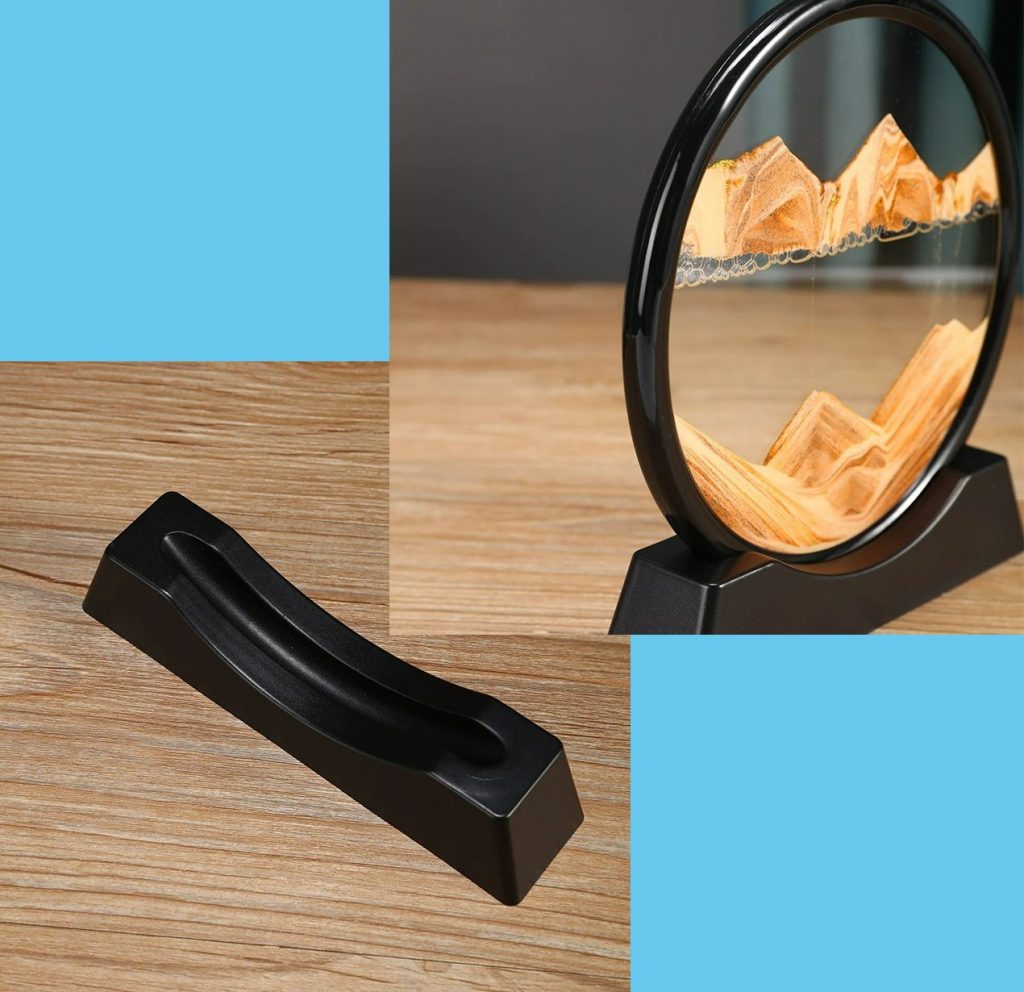
Choosing a moving sand art picture is not a small decision. Unlike most wall decor, this piece will actually move in your space. It will change color patterns every time someone walks past and flips it. It will sit on a shelf or desk for years, drawing attention every time it catches the light. Pick the right one and it becomes a quiet daily ritual. Pick the wrong one and it just becomes another object collecting dust.
This guide walks you through every factor that actually matters when choosing a moving sand art picture, from size and shape to color palette, frame material, viewing distance, lighting conditions, and the often-overlooked question of where you will physically place it. By the end, you will know exactly which piece fits your space, your lifestyle, and your budget.
Start With the Space, Not the Picture
Most buyers make the same mistake. They fall in love with a particular sand art design online, order it, and then scramble to find somewhere to put it. The result is a beautiful object sitting in the wrong place, fighting with surrounding decor and never really being noticed.
Do it the other way around. Walk through the rooms of your home and ask yourself a simple question: where do I want to feel calmer, slower, or more focused? That is where your moving sand art belongs. It could be the corner of your desk where you handle stressful email. It could be the nightstand beside your reading chair. It could be the console table in the entryway, turning every arrival home into a small reset.
Identify the spot first. Measure it. Note what is already around it. Then shop with those constraints in mind. You will end up with a piece that belongs rather than one that merely exists in your home.
Size: The Biggest Factor Most People Ignore
Moving sand art pictures come in a wide range of sizes, roughly from small desktop formats around five to seven inches to large statement pieces fifteen inches or more across. The right size depends entirely on where you intend to display it and how far away viewers will be standing.
Desktop and Shelf Sizes (5 to 8 inches)
Smaller formats are the sweet spot for personal use. They fit comfortably on a desk without crowding your monitor or keyboard. They sit on a bookshelf between decor objects without overpowering them. They are light enough to pick up and flip easily, which matters more than you might think. The more effortless the flip, the more often you will actually use the piece.
A desktop sand art picture between five and seven inches is ideal for home offices, reading nooks, bedside tables, kitchen counters, and bathroom shelves. This size also travels well if you move apartments frequently or want to take it with you on long trips.
Medium Sizes (9 to 12 inches)
Medium formats work beautifully on console tables, credenzas, and wider bookshelves. They are large enough to serve as a focal point in a small room yet not so large that they feel out of place in a casual setting. This is the size that tends to get the most compliments from guests because it is clearly a deliberate decor choice rather than a small curiosity.
Statement Sizes (13 inches and up)
Large moving sand art pictures are genuine statement pieces. Displayed on a mantle, a sideboard, or a specially made wall shelf, they command attention the way a painting or sculpture would. Be aware, though, that larger pieces are heavier and the sand movement tends to be slower. The flip becomes more of an event than a casual gesture. If you love the drama of slow, cinematic motion, this is the size for you. If you want quick, frequent flips throughout the day, go smaller.
Shape: Rectangle, Square, or Round
Most moving sand art falls into three shape categories, each with a distinctive personality.
Rectangular Landscape
Rectangular landscape formats are the classic choice and for good reason. The horizontal orientation gives the sand room to form sweeping horizons, layered mountain silhouettes, and wide valleys. If you want the piece to evoke actual landscapes — mountains, dunes, canyons — rectangular is usually the right call. A Movingsandscape deep sea sandscape picture is a good example of how much drama a rectangular frame can hold.
Square
Square frames feel more modern and graphic. The symmetry shifts the emphasis from landscape imagery toward abstract pattern. Square sand art looks especially good in contemporary minimalist spaces where the framing itself becomes part of the composition.
Round
Round moving sand art is a relatively newer format and has a completely different feel. The circular frame eliminates the landscape association entirely and makes each flip feel more like watching a miniature planet form. Round pieces also work wonderfully grouped with other round decor like mirrors or wall clocks.
Color: Match the Mood, Not Just the Walls
Color is where moving sand art buyers overthink. The instinct is to match the sand color to the walls or the furniture. Resist it. Your wall paint will still be the same in five years. The sand art is a focal point. Its job is to draw your eye and hold it, not to disappear into the background.
Instead of matching walls, match the mood you want the space to have.
Blue and White Sand
Blue tones feel oceanic and calming. This is the most popular palette for a reason. Blue sand evokes beaches, deep water, and coastal skies. It reduces mental noise and makes a busy room feel softer. Ideal for bedrooms, home offices, and any space where you want to lower stress. White sand paired with blue liquid gives a snowy, serene look that works year-round without feeling seasonal.
Warm Earth Tones (Amber, Rust, Brown)
Warm sand in amber, rust, or deep brown reads as desert landscapes. These pieces feel grounding rather than calming in the oceanic sense. Excellent for living rooms, libraries, and spaces meant to feel rich and enveloping. Warm tones also pair beautifully with leather, wood, and brass accents.
Monochrome Black and White
Black sand in clear liquid is the most dramatic option. Every flip creates stark, ink-like patterns that feel more like abstract art than landscape. This palette suits modern, minimalist, and industrial spaces. It is the choice for people who want the sand art to feel like a sculpture rather than a nature object.
Multi-Color Blends
Some moving sand art pictures use two or three sand colors that swirl during the flip before settling. These are playful and kinetic, perfect for creative studios, kids’ rooms, or anywhere you want to introduce a sense of movement and energy. They tend to attract more attention than monochromatic pieces, which is either a feature or a drawback depending on your goals.
Frame Material: Wood, Metal, or Acrylic
The frame around the glass is not just protection. It is a major design element that determines how the piece reads in your space.
Wood Frames
Wood frames are warm, traditional, and forgiving. Light oak and walnut feel Scandinavian and clean. Dark stained wood feels classic and library-like. Wood frames blend easily with most existing decor and tend to age well. If you want a piece that will still feel right in your home a decade from now, wood is the safe choice.
Metal Frames
Metal frames — typically aluminum or steel in black, silver, or gold finish — feel modern, sleek, and intentional. They photograph beautifully and suit contemporary interiors. Black metal frames in particular give the piece a gallery-quality seriousness that wood cannot quite match.
Acrylic and Frameless Designs
Some moving sand art pictures are essentially frameless or use thin acrylic edging. These are the most minimalist options. They let the sand itself do all the talking. Best suited for ultra-modern interiors where any visible framing would feel like visual clutter.
Viewing Distance and Angle
Here is something no one talks about: moving sand art pictures look different depending on how close you are. Up close, you see every grain of sand, every bubble, every tiny cascade. From across the room, you see the overall pattern and silhouette but lose the fine detail.
If the piece will sit on a desk where you view it from two or three feet away, any quality moving sand art will reward the close-up view. If you are placing it across a room — say on a mantle viewed from the couch ten feet away — size and contrast matter much more. A small, subtle piece will look lost at that distance. Go larger and choose higher-contrast colors so the patterns read clearly.
Viewing angle matters too. Moving sand art is designed to be viewed head-on. Looking at it from a steep angle distorts the patterns and muddies the image. Before you commit to a spot, stand where you will actually be when you look at the piece and make sure the angle works.
Lighting: The Unsung Hero
Lighting can make a moving sand art picture sing or fall flat. Most pieces look best with indirect natural light during the day and warm indoor lighting in the evening. Direct sunlight — the kind that pours through an uncovered window for hours — can be problematic for two reasons. First, prolonged UV exposure may affect the liquid and sand over time. Second, direct sun creates harsh glare on the glass that washes out the detail you paid for.
Aim for a spot with ambient light but not direct sun. If you want to add a dedicated light, a small picture light mounted above the frame or a nearby table lamp angled at the piece creates beautiful evening ambiance. Avoid harsh overhead downlights; they flatten the three-dimensional quality of the sand layers.
Practical Considerations Most Guides Skip
The Stand Matters
Some moving sand art pictures come with a built-in stand; others require a separate easel or have a hanging bracket for wall mount. Think about how you will actually display the piece. A stand means you can flip it without taking it off anything. A wall-mounted piece looks elegant but flipping it is a two-handed operation that may discourage frequent use.
Weight and Mobility
Sand art pictures are heavier than they look. The liquid inside adds significant weight. If you plan to move the piece between rooms or take it off a shelf regularly, check the weight before buying. A twelve-inch picture can easily weigh four or five pounds. That is fine for a permanent spot but annoying if you want to hold it while watching.
Temperature Tolerance
Moving sand art pictures should live in normal indoor temperatures, roughly 60 to 80 degrees Fahrenheit. Extreme cold thickens the liquid and slows the motion. Extreme heat can affect the bubble and, in rare cases, the seal. Avoid placing the piece near radiators, fireplaces, or air conditioning vents that blast it directly.
Quality of the Bubble
This is a detail only experienced buyers notice. Every moving sand art picture has a small air bubble inside that allows the sand to cascade when flipped. The size and behavior of this bubble says a lot about build quality. A well-made piece has a single, smooth bubble that travels cleanly through the sand. Cheaper pieces sometimes have multiple small bubbles or a foamy bubble that breaks up during movement. If possible, look at video reviews before buying to see how the bubble behaves in motion.
Matching the Piece to Your Personality
Moving sand art is a deeply personal object. Unlike a painting that you look at for a few seconds and move on, this is a piece you will interact with physically, over and over, for years. The design has to reward repeated viewing.
Ask yourself what kind of viewer you are. Do you enjoy watching the entire slow cascade, settling in for three or four minutes to see the sand fully fall? You want a piece with rich layering and multiple sand colors that create complex patterns. Are you a quick-flipper who glances at it between tasks? Simpler, higher-contrast designs work better because you can read them in a glance. Do you like the meditative stillness after the motion stops? Pay attention to what the sand looks like at rest, not just during the flip. Some pieces are gorgeous in motion but visually flat when still.
Budget: What You Actually Get at Different Price Points
Moving sand art pictures span a wide price range, from budget pieces around thirty dollars to artisan pieces over three hundred. Here is what actually changes as the price goes up.
Entry level pieces typically use basic glass, standard sand, and simple wood or plastic frames. They work, they look fine, and they make a perfectly good gift or starter piece. The flip may be less smooth and the bubble less uniform, but the core experience is intact.
Mid-range pieces add better glass clarity, more carefully graded sand for smoother flow, sturdier frames, and often a built-in stand. This is the sweet spot for most buyers. You get a piece that will last, look great, and perform reliably.
Premium pieces use museum-grade glass, multiple sand colors, precision-engineered bubble ratios, and hand-finished frames. Some premium pieces are made in small batches and treated as limited editions. If you are decorating a space where everything matters — a home office for a creative professional, a gift for someone who appreciates craft — the upgrade is worth it.
Questions to Ask Before You Buy
Before you click purchase, run through this short checklist. Do you know exactly where this will go, and have you measured the spot? Does the size suit both the surface and the viewing distance? Does the color palette match the mood you want for that room? Is the frame material consistent with surrounding decor? Can you flip it easily from where it sits? Is the spot out of direct sun and away from temperature extremes? Will the piece be viewed primarily head-on? If you can answer yes to all of these, you are ready.
FAQ: Choosing a Moving Sand Art Picture
What size moving sand art is best for a desk?
For most desks, a piece between five and eight inches works best. It fits beside a monitor without crowding and is light enough to flip casually during the workday. Larger pieces can dominate a desk and discourage regular interaction.
How do I choose a color that will not clash with my decor?
Pick a color that supports the mood of the room rather than matches the wall paint. Blue and white for calm spaces, warm earth tones for grounded ones, and monochrome for modern minimalist rooms. The piece should complement the mood, not disappear into the walls.
Are larger moving sand art pictures better?
Not necessarily. Larger pieces are more dramatic but heavier and slower to flip. Smaller pieces get used more often because they are effortless to pick up and handle. Size should match the viewing distance, not your desire for a statement.
Is a wood or metal frame better?
Wood frames are warmer and more forgiving; they suit a wide range of interior styles and age gracefully. Metal frames feel more modern and gallery-like. Choose based on the rest of your decor rather than on durability; both materials hold up well.
Can I put moving sand art in direct sunlight?
It is better to avoid direct, sustained sunlight. UV exposure over time may affect the internal liquid, and sun glare washes out the visible patterns when you are actually looking at the piece. Ambient natural light is ideal.
How important is the quality of the air bubble?
Very. The bubble is what creates the cascading motion. A well-made piece has one smooth bubble that travels evenly. Pieces with foamy or multiple small bubbles produce less satisfying movement. This is one of the clearest indicators of build quality.
Should my first moving sand art be premium or entry-level?
If you are unsure whether you will love the format, start with a quality mid-range piece rather than the cheapest option. Entry-level pieces can be hit-or-miss on build quality and may turn you off from the medium entirely. A solid mid-range piece gives you the real experience and usually lasts many years.
The Right Piece Becomes a Ritual
The best moving sand art pictures are not the most expensive or the biggest. They are the ones you actually flip. Three times a day. A few times an hour during a hard afternoon. Right before bed. That small gesture becomes a marker of intention, a tiny pause between moments.
Choose your piece with that ritual in mind. Start with the space, then the size, then the shape, color, frame, and placement. Consider how lighting will interact with it and how heavy it will feel when you reach for it. Match it to your personality — slow watcher or quick flipper — and to your budget honestly. When you get all of this right, the piece stops being decor and becomes a daily companion. And that is what makes moving sand art different from almost anything else you will put on a shelf.