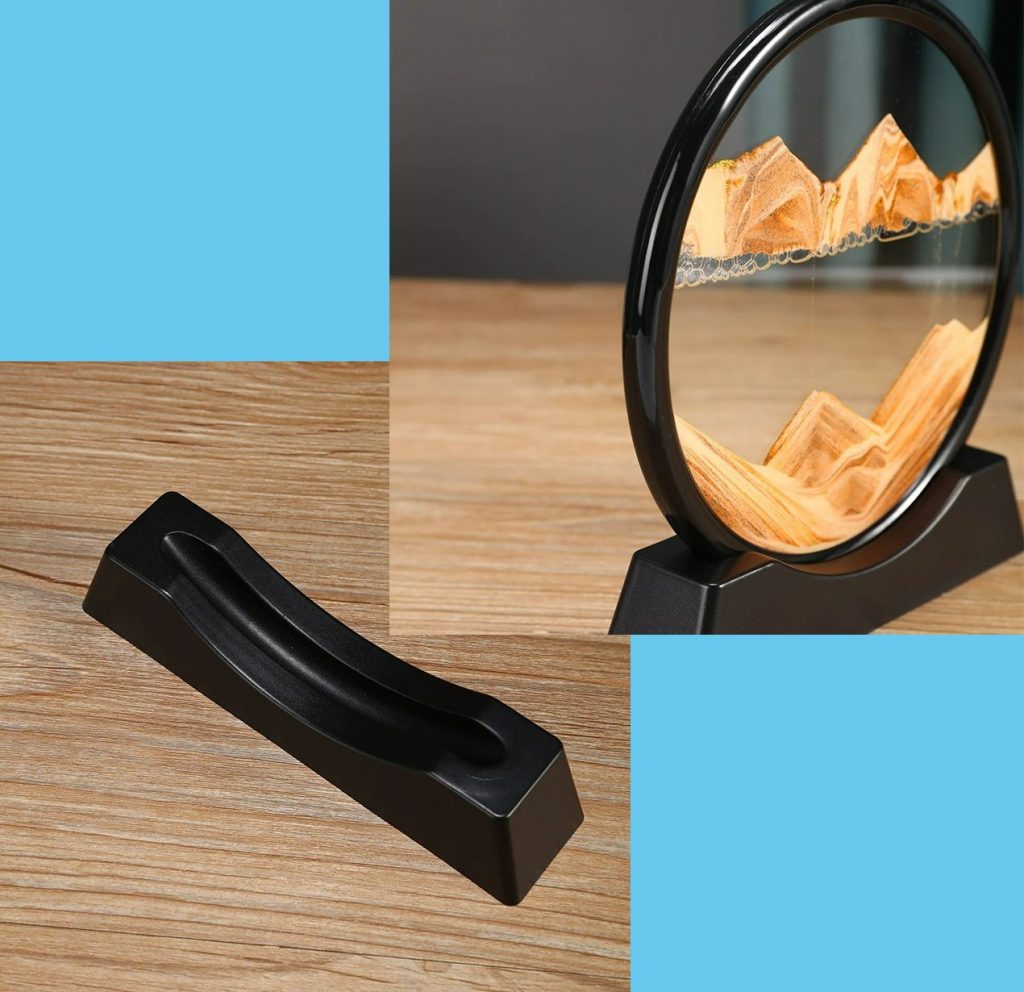
One of the most common questions we receive from people who have lived with their moving sand art for a year or two is also the one they have been slightly afraid to ask: can I clean the glass without ruining the piece? The answer is yes, comfortably. But there are a handful of specific mistakes that do cause damage, and the wrong cleaner or the wrong cloth can leave a mark that does not come back out. This guide is the practical, step-by-step version we send to customers when they email us on a Saturday afternoon with a small child and a sticky handprint in equal amounts of panic.
The short version: use a microfibre cloth, use almost nothing else, and never spray anything directly onto the piece. The long version covers the material specifics, the edge cases, and what to do when something has already gone wrong.
How moving sand art is constructed, briefly
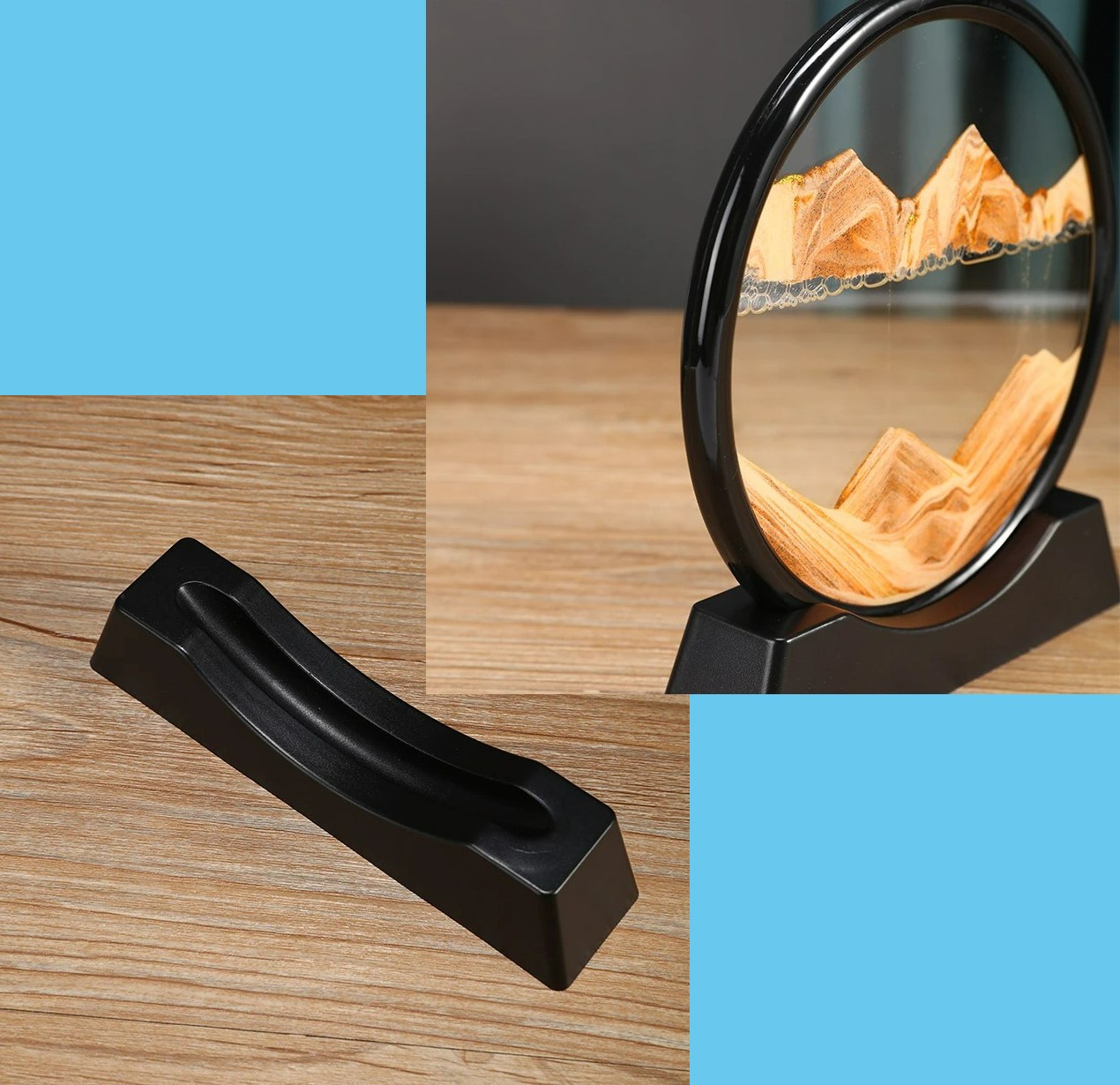
Understanding the cleaning guidance means understanding what is in front of you. A moving sand picture is a sealed, liquid-filled cavity held between two sheets of glass (or in some lower-end pieces, acrylic), bound inside a frame. The liquid is usually a glycerin-and-water blend with dyes; the sand is finely graded mineral material in contrasting colours. The frame is typically wood, painted metal, or a combination. The glass is held in the frame with a combination of mechanical pressure, gaskets, and — in most well-made pieces — an inner sealing compound that is not in contact with your cleaner under normal use.
This matters because cleaning products interact with each of those materials differently. A solvent that is fine for glass may stain a wood frame. A cloth that works on a car windscreen may micro-scratch the softer acrylic on an entry-level piece. And any liquid that reaches the seal between the frame and the glass can, over time, degrade the gasket. So the cleaning rule is simple: keep fluids away from seams, and use the mildest product that gets the job done.
The essential kit, and what to leave in the cupboard
What you actually need is very short. A clean microfibre cloth, ideally two — one slightly damp, one dry. Distilled water or filtered water if your tap water leaves mineral streaks. A soft natural-bristle brush (a clean paintbrush works) for dust in the frame corners. That is the whole kit for routine cleaning on a well-made piece.
What to leave in the cupboard matters just as much. Do not use ammonia-based glass cleaner on any kinetic art frame; the ammonia is unkind to frame coatings and can react with acrylic if the piece has acrylic glazing. Skip vinegar on wood frames unless heavily diluted; it dulls finishes over time. Paper towels are the single most common cause of micro-scratches on kinetic art glass; the fibres are short and abrasive. Abrasive sponges, scouring pads, and magic erasers have no place near this category. Furniture polish will leave a hazy film. Disinfectant wipes are loaded with residues and solvents that streak.
Routine cleaning: the weekly version
For normal dust in a normal household, once a week or once a fortnight is enough.
Lay the piece flat if it is safe to do so — most desk-sized frames are happier flat for cleaning than hanging on a wall, because it reduces the chance of drips rolling into seams. If the piece is wall-mounted and heavy, leave it in place and clean carefully.
Take the dry microfibre cloth first. Wipe the glass in one direction, not in small circles, to lift the dust without pushing it into the edges. Then flip the cloth and repeat in the opposite direction. This removes ninety percent of the dust on any normally clean home surface.
If there is still a smudge, lightly dampen the second microfibre cloth with distilled water. Damp, not wet. The cloth should feel cool to the back of your hand but leave nothing on your skin when pressed. Wipe the smudge in one direction, then go over the area once with the dry cloth. Do not let damp contact linger on the frame itself; dry the frame immediately if any moisture reaches it.
For dust caught in the inner corner where the glass meets the frame, use the soft brush. Hold the piece at a slight tilt and brush outward, not inward. Never push a cloth into that corner; the seam is the weakest point of the piece and dragging fibres along it is a recipe for a streak that will not come out.
Fingerprints, child handprints, and sticky spots
Children love to press their hands on moving sand art. This is not a problem — it is how the piece earns its place in the house — and the fingerprints clean up easily. For a fresh print, the damp microfibre cloth is enough. For a dried, oily print, add a single drop of pH-neutral dish soap to about a half cup of distilled water, dip the corner of the cloth, wring it out thoroughly until it is barely damp, and wipe in one direction. Immediately follow with the dry cloth. The sequence matters: damp pass, dry pass, done. Do not let any residue dwell on the glass.
Sticky substances — jam, juice, tape adhesive — are the harder case. Never scrape them with anything metal or sharp. For jam or juice, the mild soap-and-water method is usually enough; be patient and repeat rather than pressing harder. For tape adhesive or sticker residue, a drop of isopropyl alcohol on the cloth is the gentlest effective solvent on glass, but keep it well away from the frame and the seams. Alcohol evaporates quickly, which is part of its appeal, but it can cloud certain wood finishes and some painted metal coatings. Always test on a low-visibility corner of the frame first if you have to go near it.
Cleaning the frame
The frame is where most cleaning mistakes happen. The rule: whatever finish the frame has, treat it the way you would treat a piece of furniture with the same finish. Oiled wood likes a very dry cloth and an occasional light rub with furniture oil. Painted wood wants a barely-damp cloth and nothing more. Powder-coated metal handles a damp cloth but is sensitive to harsh solvents. Natural brass will patina over time; let it, or polish it with a dedicated brass cream on a cloth, never in contact with the glass.
When you clean the frame, always go away from the glass, not toward it. Moisture travelling inward is the thing you are preventing. If you accidentally wet the seam, immediately pat it dry with a corner of the dry cloth and leave the piece flat for thirty minutes before hanging it back up.
What not to do, ever
A short, firm list: never spray anything directly onto the piece. Always apply cleaner to the cloth, then the cloth to the piece. Never immerse any part of the frame or glass in water. Never clean the piece immediately before a big move — vibration on a slightly-wet seal is the easiest way to introduce hairline leakage. Never use a steam cleaner. Never take the piece apart to clean the inside; the liquid cavity is sealed for a reason, and opening it voids warranty on virtually every brand, ours included.
Troubleshooting common problems
There are three issues we see more often than the rest.
Streaks that will not lift. Almost always caused by tap water minerals or a previous use of glass cleaner that left a film. Fix it with distilled water and a fresh microfibre cloth; two or three patient passes will clear it. If streaks persist, a drop of isopropyl alcohol on the cloth (not the glass) usually resolves it.
A hazy interior. If the cloudiness is inside the liquid cavity rather than on the glass surface, no amount of cleaning will fix it — the haze is inside a sealed compartment and usually indicates a slow interaction between the dye and the sand over years. This is not something you can reach, and trying to will void warranty. If the piece is still under warranty, contact the maker.
A single tiny dark line or bubble forming near the edge. A small bubble is normal in kinetic art; most pieces ship with one to help the sand flow. A growing dark line along an edge after cleaning is not normal and usually means a seam has been compromised. Stop cleaning, leave the piece flat, and contact the maker. In our case, a photo emailed to support is almost always enough for us to diagnose it.
A realistic long-term care rhythm
For most households, once-a-week dusting with the dry cloth, once-a-month damp-cloth clean, and once-a-year attention to the frame itself (a light oil for wood, a polish for brass, a gentle wipe for metal) will keep a moving sand art picture looking essentially the way it did when it arrived. We have customers with pieces approaching a decade old who follow exactly this rhythm, and the frames look indistinguishable from last year’s stock.
If you are ever unsure about a specific situation — a spill, a child, a moving-house question — email our support line with a photo. We reply directly, and we would rather talk a customer through a careful clean than watch a small problem become a bigger one because the first cloth that came to hand was made of paper.