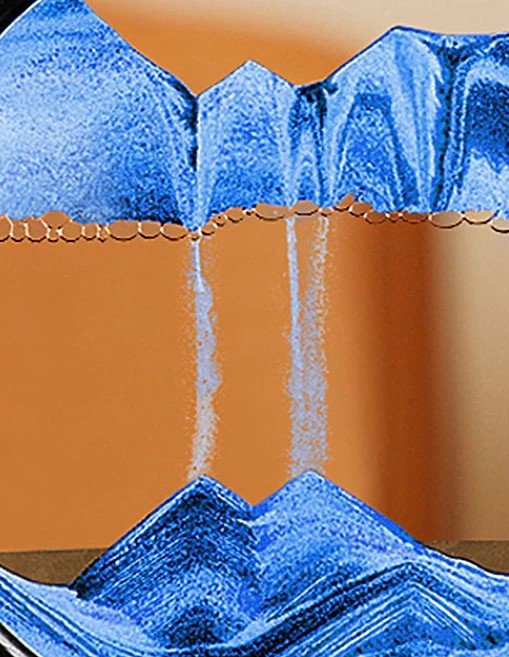
If you have ever walked past a small glass frame on a shelf and found yourself standing still for a full minute, watching tiny rivers of sand slowly pour past imaginary mountains, you have already experienced the quiet magic of moving sand art. Nothing is asking for your attention. No screen is flashing. No algorithm is trying to keep you scrolling. And yet, there you are, completely still, completely absorbed. That single experience is why moving sand art has quietly become one of the most popular pieces of decor for calm, thoughtful homes and work spaces.
Moving sand art pictures are deceptively simple objects. Two sheets of glass, a careful mixture of fine sand and water, a sealed ring of air, and suddenly you have a piece of art that never looks the same twice. Turn the frame upside down and the sand begins to fall, colliding with air pockets and drifting down in branching patterns that feel almost alive. Every flip creates a brand new landscape. No two scenes will ever repeat in exactly the same way.
This guide will walk you through everything you might want to know before you buy, receive, or simply enjoy a moving sand art picture. We will cover what it actually is on a physical level, how it works, where the idea came from, the different styles you will see out in the wild, and why something so simple has such an outsized calming effect on the people who own one. By the end, you will understand why sandscape art is one of the quietest, most unexpectedly meaningful additions you can make to a room.
A Quick Definition: What a Moving Sand Art Picture Actually Is
At its most basic, a moving sand art picture is a thin, sealed glass frame filled with water, air, and multiple colors of specially prepared sand. The frame is usually rectangular or circular, a few inches thick, and can stand on a shelf or hang on a wall. When the frame is at rest, the sand settles into a unique landscape. When you flip the frame upside down, gravity pulls the heavy grains of sand downward through the water, past trapped air bubbles, creating drifts, mountains, valleys, and slow waterfalls of sand that settle into a new composition.
Each frame is hand filled, which is why every picture is slightly different. The sand is not loose in the traditional sense. It is suspended and moved by water. The air bubbles act as temporary obstacles, creating the signature branching, cascading look that defines the art form. People often describe the movement as watching a sunset in slow motion, or a desert storm compressed into a few minutes.
What separates moving sand art from other kinetic decor, like lava lamps or bubble tubes, is that the sand itself carries color and weight. You do not just see a lava blob rise and fall. You see entire landscapes form, fracture, and reform in front of you, with textures that genuinely resemble deserts, mountains, or the ocean floor.
How Moving Sand Art Works (The Physics in Plain English)
You do not need to have paid attention in physics class to enjoy a moving sand art picture. But knowing roughly what is happening inside the glass does make it more interesting to watch, and it helps you appreciate why the same piece never repeats a scene.
Density, Water, and Air Bubbles
Inside every sandscape frame are three ingredients that do most of the work. The first is very fine, carefully graded sand, usually in two or three colors. The second is water, which fills most of the frame. The third is a small air bubble, deliberately left inside the glass when the frame is sealed. These three things interact to make the visual magic happen.
When you flip the picture, the heavier sand begins to fall through the water. Because water is denser than air, the sand does not plunge straight down the way it would in a dry hourglass. Instead, it drifts slowly. The air bubble acts as a moving barrier. As the sand falls, grains pile up on the edge of the bubble, slowly displacing it. When a piled-up section becomes heavy enough, it breaks loose and cascades in a sudden rush, similar to a mini landslide. That is why you often see a slow build-up, then a sudden waterfall of sand, then slow settling again.
Why No Two Scenes Are Ever the Same
The positions of the air bubbles, the micro-differences in how you tilted the frame, even the ambient temperature of the room, all play a role in how the sand behaves. Minor vibrations from footsteps or a nearby speaker can nudge the sand just enough to create entirely new branching patterns. Over the life of a single frame, you will watch thousands of one-of-a-kind compositions form and disappear. This unpredictability is the whole point. It is a small reminder that repetition is a human expectation, not a natural law.
A Short History of Kinetic Sand Art
Moving sand art, as we recognize it today, is a relatively young art form with ancient ancestors. Kinetic art, meaning art that moves or depends on motion, has been around in various forms for more than a century. Artists in the early twentieth century experimented with mobiles, mechanical sculptures, and early light-based works. But the specific idea of using sand, water, and air in a sealed frame as a quiet, endlessly changing piece of decor took shape in the 1980s.
Klaus Bosch is the artist most often credited with bringing modern sand pictures to a global audience. He refined the technique of layering multiple colors and grades of sand, and he worked out the balance of water and air needed to produce the slow, dramatic landslides that give the art its identity. His pieces showed up in galleries, gift shops, and private collections around the world, and inspired a wave of imitators and innovators.
Since then, the craft has spread globally. Artisans in different countries experiment with different kinds of sand, frame shapes, and air bubble configurations. Some modern pieces are small enough to sit on a desk, while others are the size of a living room window. The core idea, though, has not changed much since the 1980s. Flip the frame, watch the world inside start over.
The Many Styles of Moving Sand Art Pictures
When people first hear the phrase moving sand art, they usually picture one specific thing. In reality, there is a surprising amount of variety. Once you know what to look for, you start to notice how intentional each piece’s color palette and layout really is.
Classic Hourglass Scenes
The most traditional sandscape pictures use warm, earthy tones: tan, dark brown, ochre, soft cream. These frames tend to form scenes that look like desert valleys, rolling dunes, or layered canyon walls. They are a safe choice for almost any decor style because the palette leans neutral and the forms look organic.
Deep Sea and Aquatic Designs
Blue-dominant sandscapes create a very different feeling. Instead of dunes and canyons, you see scenes that resemble underwater trenches, coral formations, and slow deep-sea currents. These pieces work beautifully in bedrooms and bathrooms, where the cool tones support a restful mood. They also pair nicely with plants and natural wood.
Mountain and Desert Landscapes
Some sand art pictures are composed to always resemble a specific kind of landscape. The sand colors and the amount of air inside are tuned so that every flip produces a result that feels like, say, a mountain range at dusk or a windswept plateau. These pieces tend to be the most photogenic, because the results always land inside a narrow, intentional visual range.
Multi-Color Layered Sandscapes
Modern designers have pushed the craft further by layering four, five, or even six colors in a single frame. When flipped, these pieces create complex striations that resemble sedimentary rock, or sunsets stacked on top of each other. They are more visually busy than traditional pieces, but they also reward longer viewing. There is always another small detail to notice.
If you want to see a good example of the deep sea and mountain styles combined, you can check out the Movingsandscape 3D deep sea sandscape picture in our shop. It is a representative example of what a well-balanced modern sandscape frame looks like.
Why People Find Moving Sand Art So Calming
This is the part that surprises people. Moving sand art is not just decorative. People consistently report that owning one changes the quality of their home or workspace in a way that other decor does not. There are a few reasons this keeps happening.
First, the movement is slow. Our eyes evolved to track fast motion because, historically, fast motion meant danger. Slow, predictable, low-intensity motion signals safety. Watching a moving sand art picture gives your visual system exactly the kind of input it interprets as "everything is fine." Over several minutes, that translates into slower breathing, reduced shoulder tension, and a small but real dip in stress levels.
Second, the art is never finished. Unlike a painting, which your brain eventually files away as "seen," a sand art picture is always presenting you with something you have never seen before. It is familiar enough to feel comforting, but novel enough to stay interesting. That combination is unusually rare in everyday objects.
Third, and perhaps most importantly, it is low demand. A moving sand art picture does not beep, ping, or ask anything of you. You do not need to respond. You do not need to interact. You can flip it when you want to watch something new, or you can let it sit untouched for weeks. In a life full of objects that demand attention, a piece that politely offers attention without asking for it is rare and valuable.
Who Moving Sand Art Is For
Some decor pieces have a narrow audience. Moving sand art does not. In practice, the people who fall in love with these pictures come from all over the map. Remote workers use them on their desks as a break tool. Parents of sensory-sensitive children use them as a low-stimulation alternative to screens. Therapists keep them in waiting rooms because they help clients settle. Meditation teachers use them as visual anchors. People who live in small apartments appreciate that a sandscape frame delivers a lot of visual interest without taking up much physical space.
If there is a common thread, it is this: moving sand art tends to appeal most to people who feel slightly overstimulated by modern life. If you often find yourself wanting more quiet, more slowness, and more visual calm in your environment, you are likely to enjoy owning one.
Caring For Your Moving Sand Art Picture
One of the quiet pleasures of owning a moving sand art picture is that it barely needs maintenance. There are, however, a few small habits worth building.
Keep the frame out of direct, prolonged sunlight. UV exposure can slowly fade the colors of the sand over years. A brightly lit room is fine; a window that gets four hours of direct afternoon sun is not ideal. Dust the glass gently with a microfiber cloth, the same kind you would use for screens. Avoid harsh household cleaners. Do not drop the frame, and avoid leaving it in a spot where it could be knocked over. The glass is strong, but it is not unbreakable.
If you notice the air bubble behaving unusually after a few years, like becoming smaller or splitting into two bubbles, that is usually a sign of normal slow evaporation or a microscopic seal issue. Quality frames are engineered to last a decade or more, but no sealed water system lasts forever. If you plan to keep your sandscape picture for the long haul, buy from a maker that offers a replacement or repair policy.
Frequently Asked Questions About Moving Sand Art
Is the sand inside real sand?
Yes. Inside a quality moving sand art picture you will find real, fine-grained natural sand, graded by color and particle size. Some makers use quartz sand; others use specialty minerals for richer colors. The sand is pre-washed and treated so it flows smoothly through the water without clumping.
Does the sand run out or stop moving over time?
No. The sand never runs out because it is sealed inside the frame along with the water and air. Every flip redistributes the same sand. Over many years, minor changes can occur due to slow evaporation, but a well-made frame will continue to function more or less exactly the same as the day you unboxed it.
How often should I flip the picture?
As often as you want. There is no mechanical wear that gets worse from frequent flipping. Many owners flip their picture once a day, typically in the morning or at the start of a work session, as a small grounding ritual. Others flip it only occasionally and leave it alone for weeks at a time. Both are fine.
How long does one flip last before the sand settles?
Most sand art pictures finish their main cascade within two to six minutes, depending on the size of the frame and the amount of air inside. Smaller frames settle faster. Larger frames can keep moving for fifteen minutes or more. Even after the main fall is finished, small trickles and slow shifts can continue for some time as the sand redistributes.
Can children or pets be around it safely?
Generally yes, as long as the frame is placed somewhere it will not be knocked over. The frame is sealed glass containing sand, water, and air. There are no chemicals or batteries. If the glass were to break, you would have a mess to clean up, but the contents are not toxic. Still, treat it like any other breakable object and place it accordingly.
Is moving sand art a good gift?
It is one of the best low-risk gift choices for adults. It is visually striking, it is useful in a quiet everyday way, it works across decor styles, and unlike many decor gifts, it does not assume the recipient’s taste in color, pattern, or theme. For people who are hard to shop for, a moving sand art picture is an unusually safe and memorable choice.
A Quiet Addition to a Noisy World
The best argument for moving sand art is not technical. It is not historical. It is not even aesthetic. The best argument is that most of us, at this point, are tired. We are tired of screens, tired of notifications, tired of decor that is loud for the sake of being loud. Moving sand art offers a small, deliberate counterweight. It is beautiful without being loud. It is interactive without being demanding. It does one thing well, over and over, in ways that are never quite the same.
If you are thinking about adding one to your home or giving one as a gift, you do not need to overthink it. Pick a color palette that suits the room. Pick a size that fits on the surface you have. Put it somewhere you will actually see it every day. Then, occasionally, when you notice yourself speeding up or bracing for the next thing, flip the frame and watch a small world start over. That is the whole point, and that is more than enough.